Musketeer with oak leaf helmet
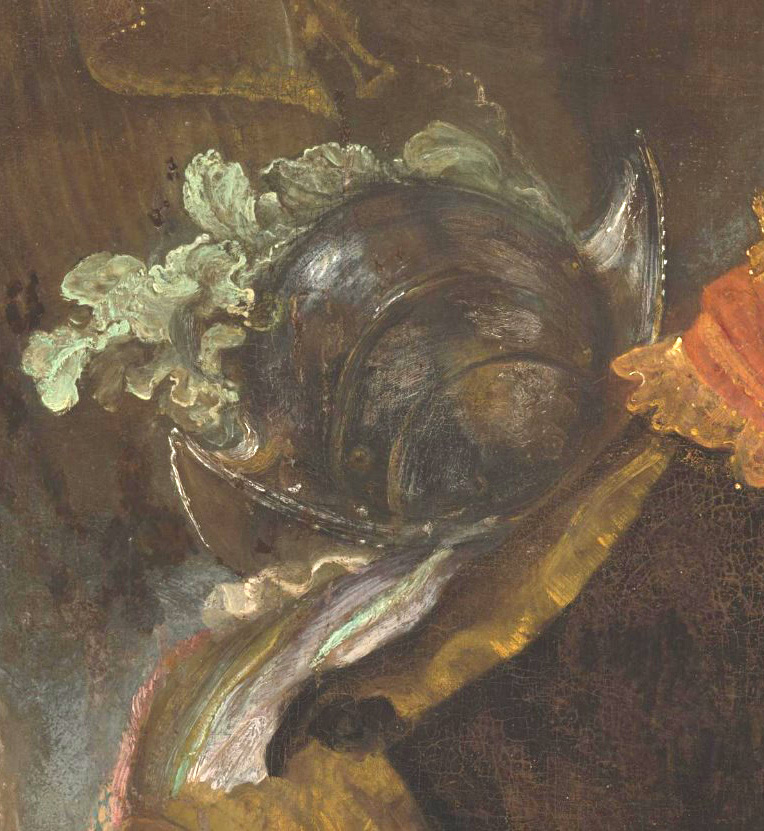
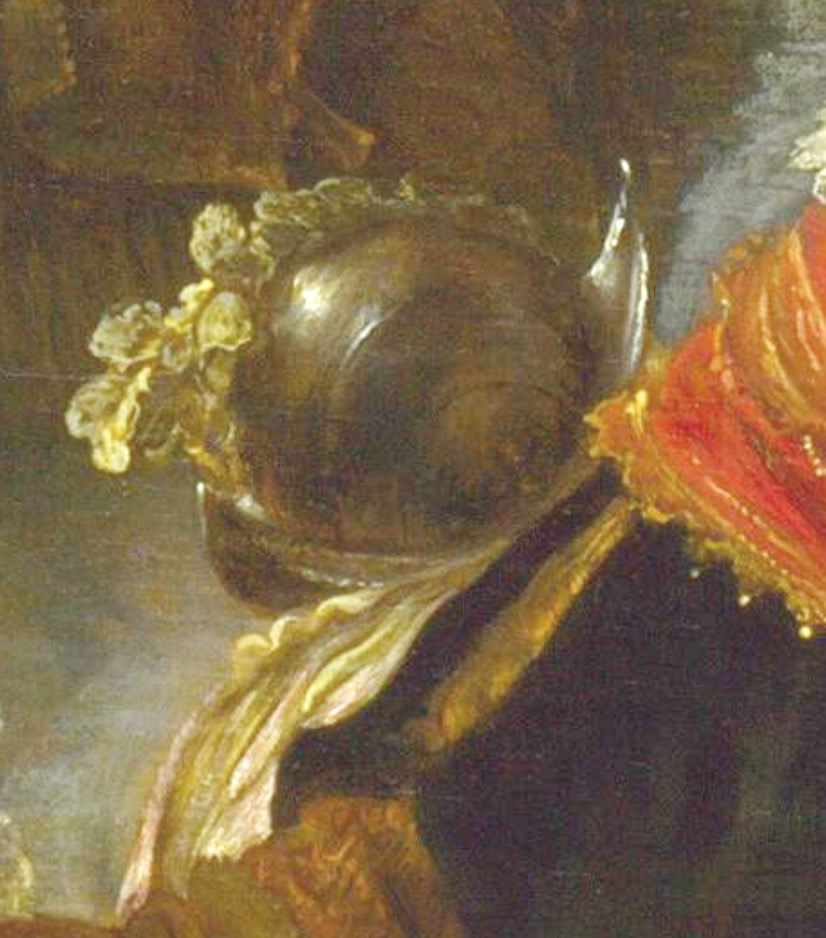
1st: Home; 2nd: by Rembrandt (1642); 3rd: by Lundens (1649).
This musketeer wears a wreath of oak leaves, the prize for winning a shooting competition. He seems about to receive the gold-decorated goblet from the girl in yellow09 who is rushing toward him. Such crystal goblets were common prizes in contests. In a drawing by Hendrik Winter from 1641, a year before The Night Watch was completed, a similar cup is presented to Captain Huydekoper.
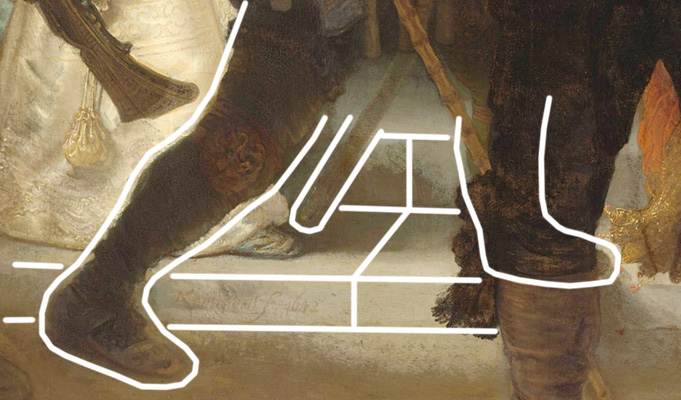
Our oakleaf musketeer fires a celebratory shot in honor of his victory.
He fires upward rather than horizontally, which is logical enough since his left foot stands one step higher than his right.
He is not positioning himself as recommended in de Gheyns drawings, and he is not using his forquette. It trails behind him, almost touching the front foot of the yellow girl running toward him.
She's watching the musketeer, not her feet.
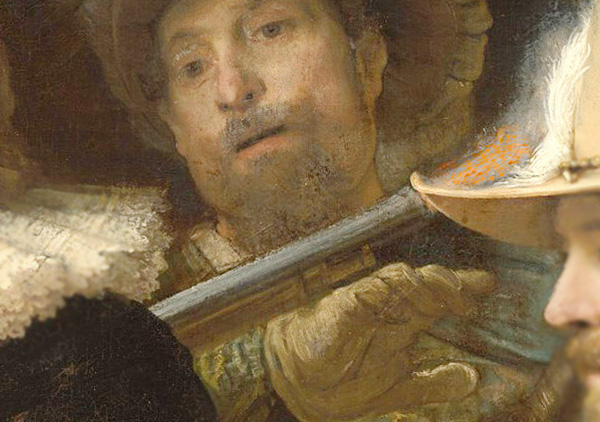
The blank shot passes directly before and above the heads of Keijser20 and Ruytenburch21. Keijser raises a hand defensively. He may have been planning to step forward at that exact moment to follow the marching orders.
Carrying an immense two-handed backsword, now held only in his left hand, he looks as if this sudden shot was not entirely planned. Or at least, that is what the mischievous Rembrandt wants us to believe.
Of course, this shot exists only in the painting. Anyone who has ever witnessed a musket reenactment knows that at this distance both shooters, Banninck Cocq16, and the young girl would have been deaf for several minutes, if not longer. There should also have been a large cloud of smoke around the oakleaf musketeer.
A small puff can still be seen to the left of Banninck Cocqs head, though much has disappeared through wear and tear.
A larger cloud must once have been visible behind Ruytenburchs head.
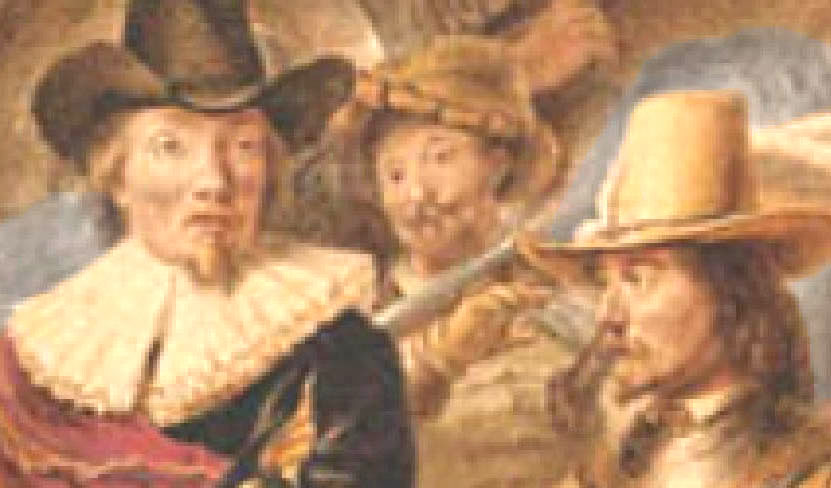
This larger cloud does appear in the watercolor made by painter Jacob Cats (1741 - 1799, unrelated to the poet) after Lundens copy.
In Gerrit Lundens version, the oak leaves look less fresh and the helmet reflects more light. Considering the small size of Lundens copy, only 66 x 85 cm (26 x 33 inches, roughly forty times smaller than the original), and the fact that he had to make his copy in the dark and smoky main hall of the Kloveniersdoelen, the level of detail he achieved is remarkable.