Frightened stray dog
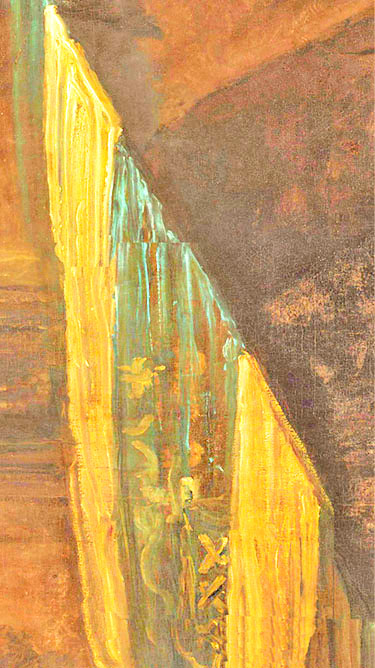
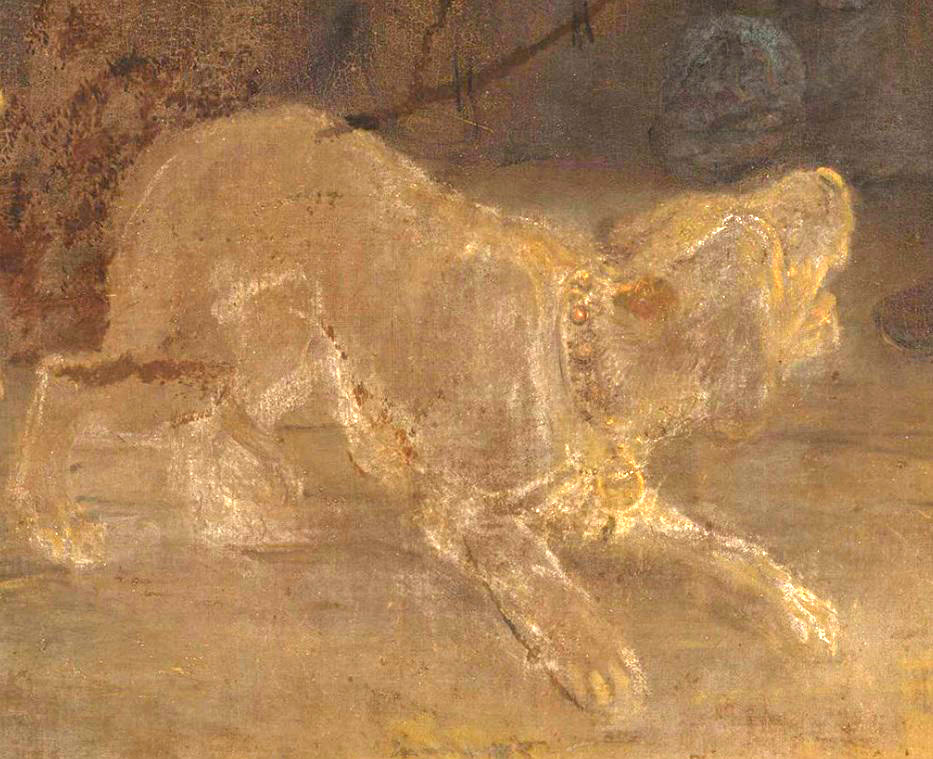
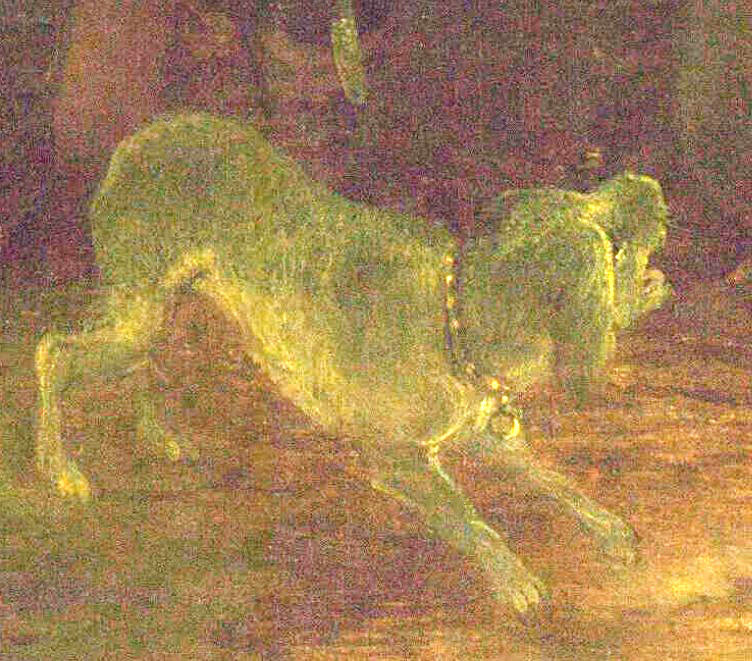
1st: Home; 2nd: by Rembrandt (1642); 3rd: by Lundens (1649)
In The Night Watch, the dog is one of the smallest figures on the canvas, yet he behaves exactly as you would expect from the only creature in the painting who is not posing, not paid, and not pretending to be a civic guard.
His paint layer has partly dissolved over time, leaving us with a ghostly outline and a glimpse of Rembrandt’s original sketch beneath. In contrast, Gerrit Lundens’ small copy has aged far more gracefully, making the dog — collar included — much easier to recognize.
The dog shoots forward, barking, as if startled by the drummer’s enthusiastic pounding. A perfectly logical reaction, except for one detail: a musket has just been fired directly behind him. The explosion would have drowned out the drum a hundred times over, but in Rembrandt’s frozen moment the dog simply has not had time to process the situation. He is caught between instinct and acoustics.
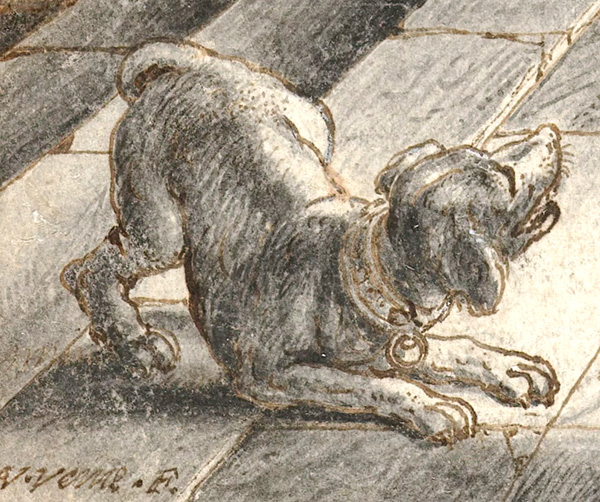
Rembrandt did not invent this dog from thin air. Just as he based the musketeers’ poses on de Gheyn’s 1607 drill manual, he likely borrowed the dog’s posture from a 1619 illustration by his contemporary Andriaen van de Venne (1589 -1662), painter, poet, and specialist in humorous scenes.
The resemblance is striking: the head, the collar, the startled expression. Van de Venne’s playful style would have appealed to Rembrandt, who enjoyed slipping small jokes into otherwise serious compositions.
Dogs appear frequently in militia portraits. Frans Hals, Bartholomeus van der Helst, and Ferdinand Bol all included them, usually lying obediently at their master’s feet or gazing upward with loyal devotion. Rembrandt, as usual, chose the opposite. His dog is not calm, noble, or symbolic. He is simply trying to get out of the way.
And that is the charm. The Night Watch is not a rigid tableau of men posing for posterity. It is a treasure chest of tiny action moments00 — a captain stepping forward, a girl running, a musket firing, and a dog deciding that this is all far too much. With this frightened stray, inspired by van de Venne, Rembrandt once again nudged the genre forward. Even the dog refuses to stand still.