Civic guard looking up to his pike
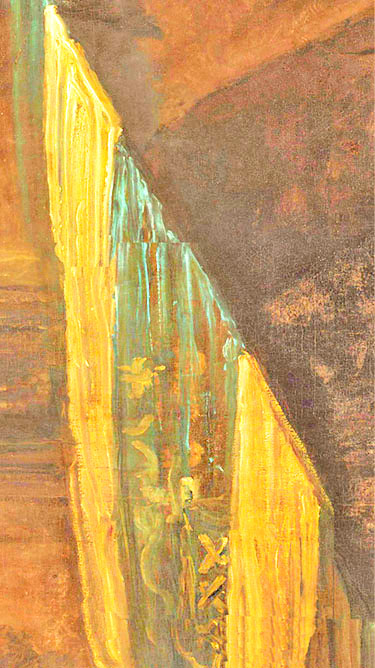
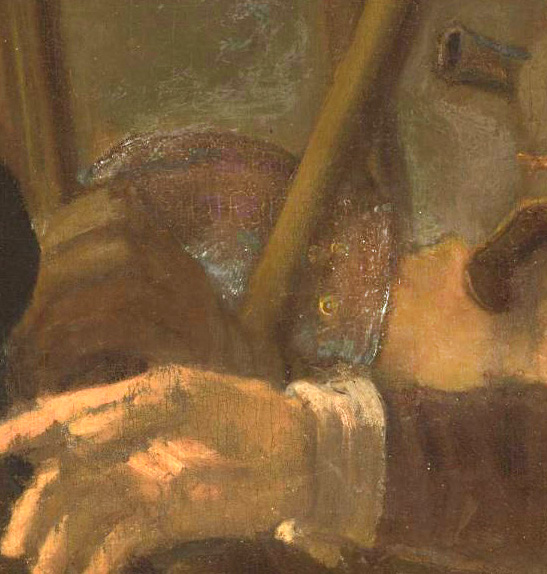
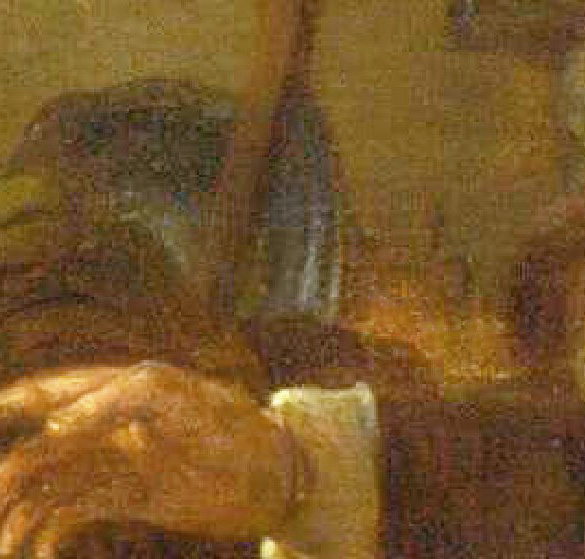
1st: Home; 2nd: by Rembrandt (1642); 3rd: by Lundens (1649).
Rembrandt paints this man leaning back and looking upward at the tip of a pike resting against the wall in front of him. He must therefore be one of the anonymous users of the dozen pikes stored along the gate.
His helmet is depicted with some care, but only a fragment of his nose is visible. In the dimly lit Kloveniersdoelen, painter Lundens evidently struggled to see him clearly. In his copy he shifted the hat of the unknown musketeer26 slightly to the right, which allowed him to suggest an upper lip beneath the nose.
Pikeman Bolhamer24 stands directly behind his back and already holds his own pike. The unidentified man in front of him is a musketeer. The pike next to the man looking upward must therefore belong to him: a pikeman of district 2 who did not pay to be immortalized in The Night Watch.
His metal helmet is of the same plain type worn by musketeer Leijdeckers23 and pikeman Schoonhoven30. Since the civic guards did not pose as a group, these antique Spanish helmets may well have come from Rembrandt’s studio, reused with small variations in the final painting.
Rembrandt shows the man hesitating, trying to work out how to remove his pike safely from the mikado of weapons leaning against the wall. Some caution is clearly required.
In doing so, Rembrandt not only suggests a larger crowd of civic guards but also uses this partial face to heighten the tension of the moment, just before the company begins to march at Banninck Cocq's16 command.